 Kolkata is also known as Calcutta earlier. It is was the capital of British India and at present it is capital of West Bengal. Kolkata is famous for being the commercial capital of the east, which houses major industrial plants, textile mills and corporate houses. The people of Calcutta have great passion for arts and sports especially for football and cricket. City continues to move ahead on the path to development and economic growth as highlighted in the higher growth rate than national average.
Training Providers : There are various institutes which provides training and certification in Six Sigma Methodologies. Few of them are listed below.
(1) Benchmark Six Sigma
Bidhannagar
Kolkata, Kolkata, West Bengal 700064
(2) Indian Institute of Management Calcutta,
Diamond Harbour Road, Joka,
Kolkata – 700104.
E-mail: mgrmdp@iimcal.ac.in
Website: www.iimcal.ac.in
(3) BSI Management Systems India Pvt Ltd.
No.10 (5th Floor), Camac Tower
3C Camac Street,
Kolkata 700 016, India
Email: bsikolkata@bsigroup.com
(4) Arena Multimedia
View Details #390-A, Nalini Ranjan Sarani, New Alipore, Kolkata – 700053
(5) I.T. Kids
View Details #FD-462, Sector 1, Salt Lake, Netaji Park, Bidhan Nagar, Kolkata – 700064
Course Fees : The Course fees vary from the institute to institute and also depends on the type of certification one is interested in pursuing. Usually the course fees for different certification are as follows.
Green Belt Certification Fees : Rs 15000 to Rs 20,000
Black Belt Certification Fees : Rs 40000 to Rs 60000
Master Black Belt Certification Fees : Rs 60000 to Rs 80000.
Certification provided : Wide range of certifications and training programs related to Six Sigma and other quality management programs are provided by various institutes.
Most common certification programs offered by Six Sigma institutes are as follows :
(1) Six Sigma Green Belt Certification
(2) Six Sigma Black Belt Certification
(3) Six Sigma Master Black Belt Certification
(4) Six Sigma Champion Training
 Chennai is the capital of the state of Tamil Nadu and is one of the metropolitan city of India. It is also known as “Gateway to South India”. It is well connected internationally and to other parts of India and boasts of rich historical legacy. Various key industries that add to its emerging and flourishing economy includes automobile, software services, hardware manufacturing, petrochemicals, textiles and financial services.
 Hyderabad is the capital city of Andhra Pradesh. This city has 400-year-old history and exhibits a rich blending of cultures. It is also known as “City of Pearls” . It has heritage monuments, lakes, parks, gardens, resorts, museums and delectable cuisine. It is famous for known for its interesting diamond markets, pearls, glass embedded bangles and beautiful sarees. Hyderabad is one of the fastest developing cities in India and truly a modern hub of Information Technology and Biotechnology.
 Bangalore or Bengaluru is also known as Silicon Valley of India and it is Asia’s fastest growing cosmopolitan city today. It houses some of the most high tech industries in India. Also known as the ‘byte-basket’ of India due to its booming I.T. industry, Bangalore is home to India’s premier scientific establishments. City has got salubrious climate, gardens & parks , natural lakes, architectural landmarks, shopping malls, the best restaurants and pubs.
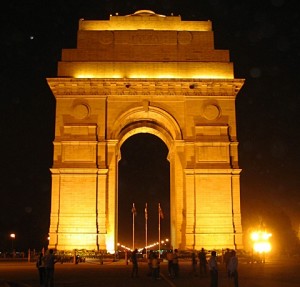 Delhi is the capital of India and it is the third largest city of the world. It is rich in its historical and cultural values. The life-styles and language of the people is influenced by the various states bordering Delhi. People of Delhi are a blend of modern and traditional virtues. They are very open to modern ideas, inventions and the fantasies of the modern social ethos and migration of people from different parts of India to Delhi has led to the rise and growth of diverse culture.
 Mumbai is also known as the Commercial Capital of India. It is the economic hub of most of the financial and business activities and developments in the country. Most of the Big Indian companies like Tata Group, Godrej, Reliance, State Bank of India etc included in Fortune 500 Group are based in Mumbai. Majority of the foreign banks and financial institutions have set up their offices in Mumbai.
 Six Sigma Seminar is a instructional process that trains the candidates on Six Sigma Methodologies and teaches them to apply the statistical methods of six sigma systematically for the organizational growth and customer satisfaction. Candidates are trained on the topics related to the importance and usage of data, information, analysis, and communication for a successful problem solving.
 While implementing quality within the organizations, professionals feel they should have the power to bring about the desired change themselves. However when one does not have proper idea to proceed then it’s better to take help from the experts outside the organization because change is essential to survive and stay competitive in the prevailing market.
 Companies which implement the Six Sigma initiatives in one way or another are called as Six Sigma Companies. Each company implements Six Sigma within its unique scope. One of the aspects of Six Sigma is that it can be adjusted and tailored to meet the needs of the individuals and strategy of a company. This feature has led to various levels of implementation and deployment.
 There are lots of training institutes and consultants who provide the certifications on completion of their course. Some of the famous certifications are from ASQ, IEE, BMG, and Benchmark Six Sigma.